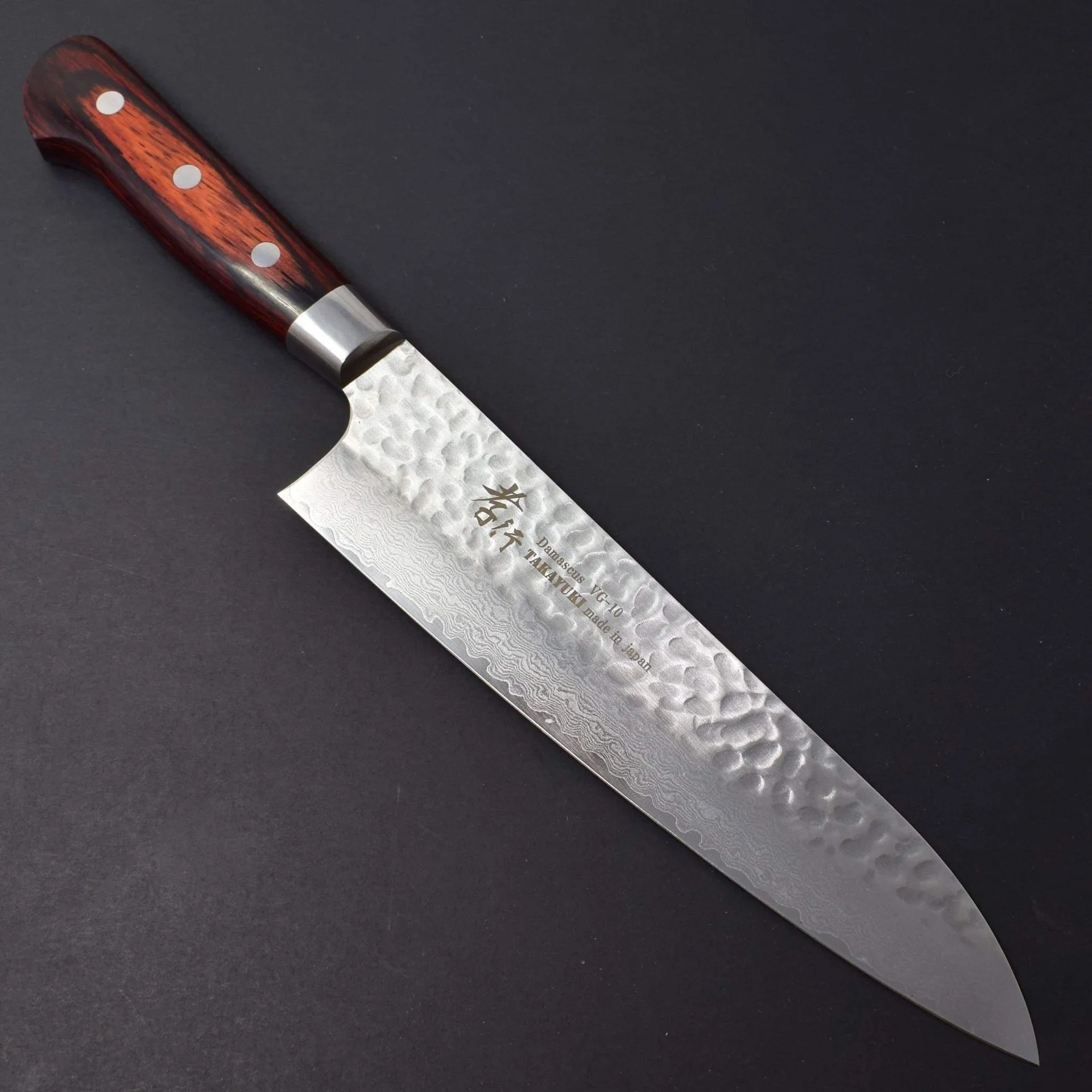
Sakai Takayuki - Six Centuries of Blade Mastery
In the historic blade-making city of Sakai, where samurai swords were forged for six centuries, master artisans continue a tradition of excellence - hand-crafting Sakai Takayuki knives that professional chefs and passionate home cooks reach for instinctively.
Explore the CollectionCore Values
600-Year Heritage
Sakai has been the heart of Japanese blade-making since the 14th century. The same techniques that forged samurai swords now shape the world's finest kitchen knives, refined across twenty generations of master craftsmen.
Hand-Forged in Sakai
Every Sakai Takayuki blade is forged and sharpened by hand in our Sakai workshop. Master blacksmiths like Itsuo Doi and Kenji Togashi shape each knife individually, ensuring a level of precision no machine can replicate.
Master Sharpened
The Yamatsuka family of master sharpeners finishes each blade by hand. Their honbazuke technique creates an edge so refined it glides through ingredients with virtually zero resistance - the hallmark of a truly professional knife.
Knives That Inspire
Three exceptional blades that show the breadth of Sakai Takayuki craftsmanship - from the attainable bestseller to the ultimate art piece.
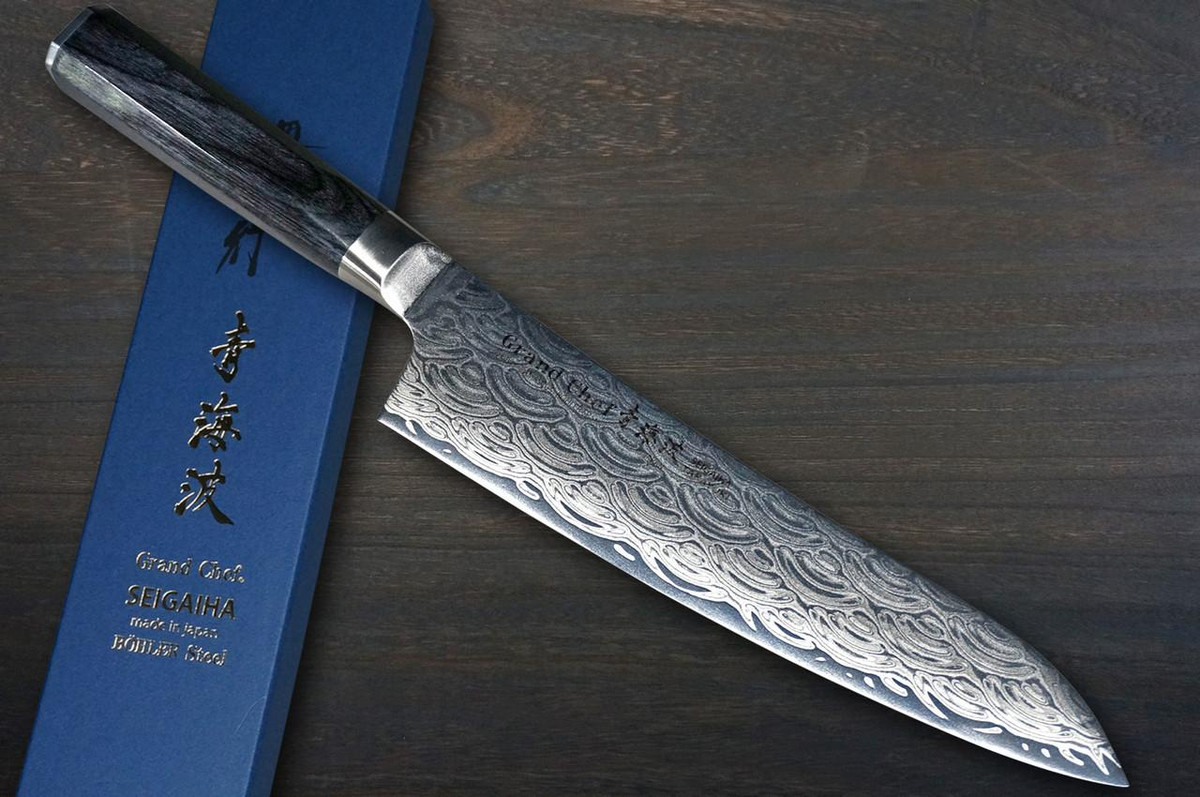 FUGAKU
 Art Mirrored Honyaki Gyuto
The crown jewel of Sakai Takayuki. A differentially hardened monosteel blade with an art mirror finish that reflects light like liquid silver.
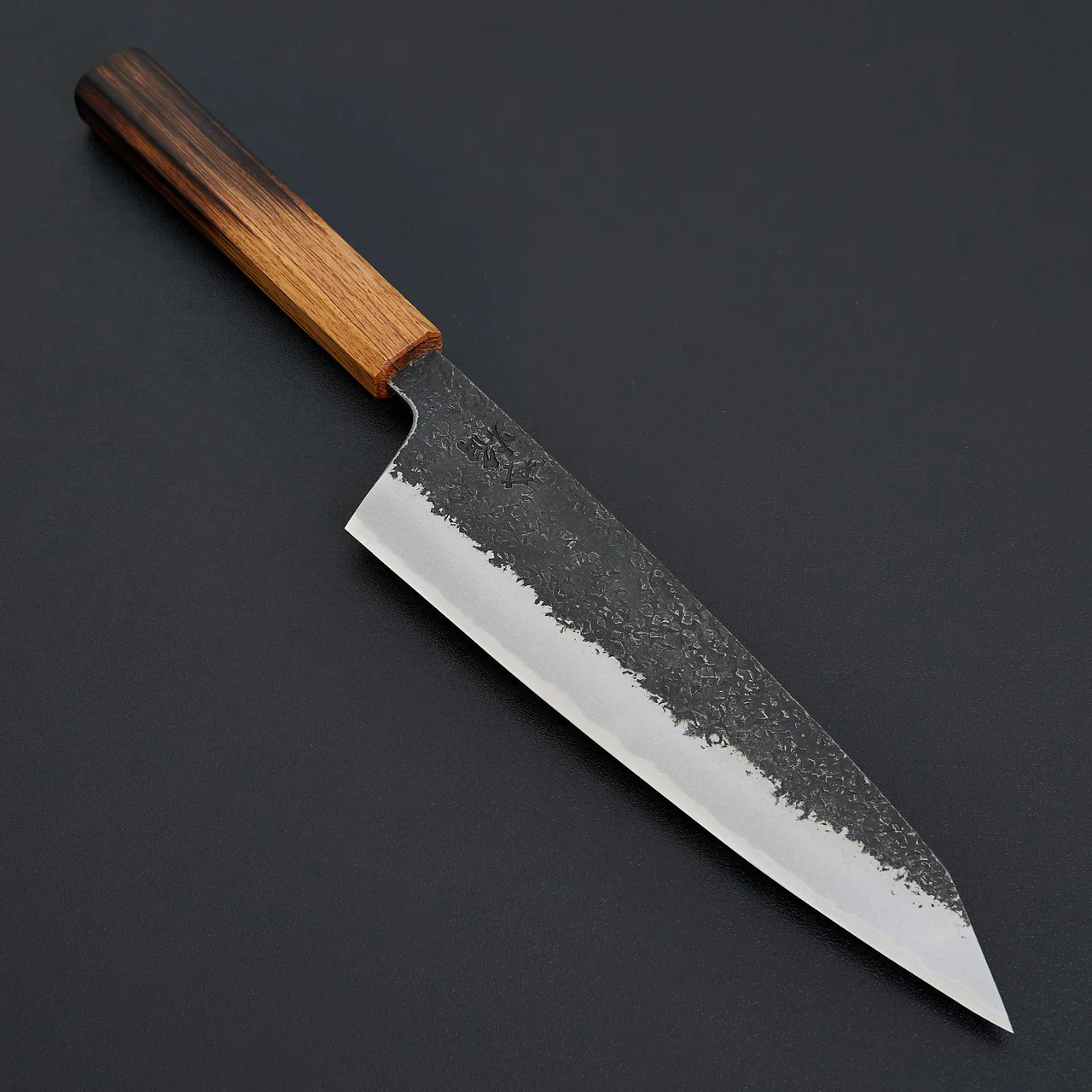 Homura Guren
 Aogami 2 Kurouchi Gyuto
Forged by master blacksmith Itsuo Doi. Carbon steel with a striking kurouchi black forge finish and raw, elemental beauty.
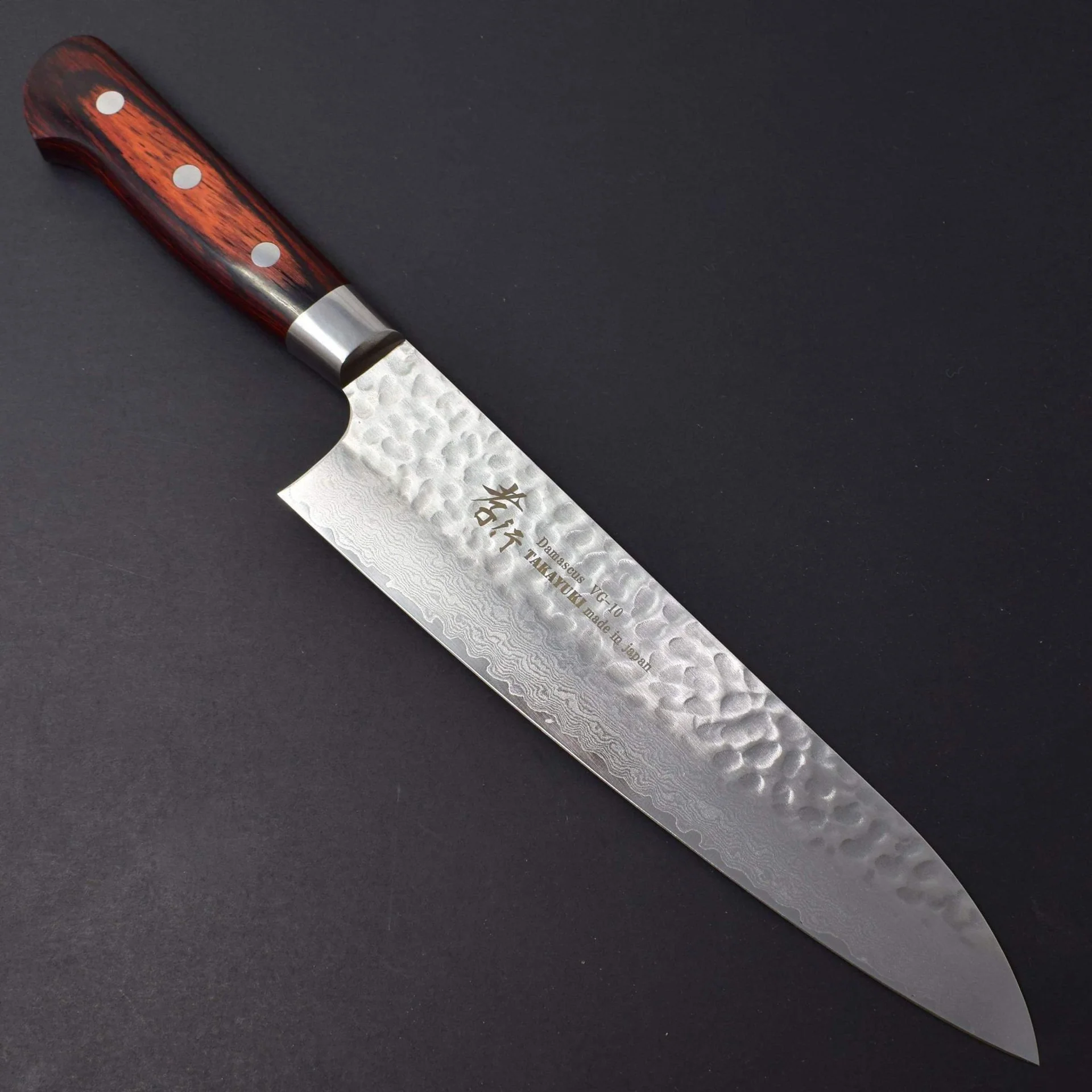 33-Layer Damascus
 VG10 Hammered Gyuto
The global bestseller. 33-layer damascus cladding with a distinctive tsuchime hammered finish that reduces food sticking during cutting.
The Art of Japanese Bladesmithing
The story of Sakai Takayuki begins not in a factory, but in a city where fire, steel, and human skill have converged for over six centuries. Sakai, a port city in Osaka Prefecture, has been Japan's blade-making capital since the 14th century. When samurai roamed the land, Sakai's swordsmiths forged the katana that would define an era. Today, those same forging traditions live on in every knife that bears the Sakai Takayuki mark.
Under the Aoki Hamono workshop, established by the Aoki family in 1950, Sakai Takayuki brings together a remarkable collective of talent. Master blacksmiths Itsuo Doi and Kenji Togashi heat, hammer, and shape raw steel into blade blanks with an intuition that only decades of daily practice can produce. The Yamatsuka family of sharpeners then applies the honbazuke technique - a meticulous hand-sharpening process that creates an edge so acute it can slice through paper with barely a whisper.
What sets Sakai Takayuki knives apart from many brands that have emerged in recent years is this: they are not a marketing company that happens to sell knives. They are a manufacturing workshop that has been quietly producing professional-grade blades for Japan's most demanding chefs for over seven decades. When you hold a Sakai Takayuki knife, you are holding the accumulated knowledge of twenty generations of Sakai bladesmiths - compressed into a single, perfectly balanced tool.
"Not mass-produced. Not factory-churned. Each blade is a conversation between steel and craftsman."
The Collection
Twelve expressions of Japanese blade-making mastery. From entry-level Damascus to art-grade Honyaki, each knife is hand-forged and hand-sharpened in Sakai.
FUGAKU Art Mirrored Honyaki Gyuto
The crown jewel of Sakai Takayuki. A differentially hardened monosteel blade with an art mirror finish that reflects light like liquid silver.
 GINGA
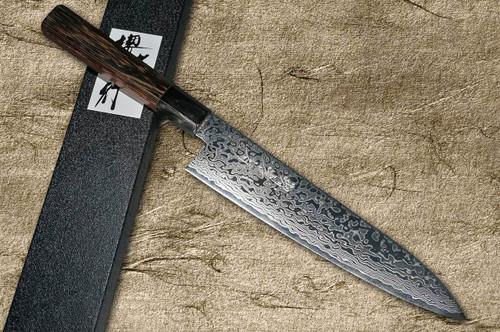
GINGA ZA-18 69-Layer Damascus Gyuto
Premium powder metallurgy steel clad in an exquisite 69-layer damascus pattern that evokes a galaxy of stars along the blade.
Homura Guren Aogami 2 Kurouchi Gyuto
Forged by master blacksmith Itsuo Doi. Carbon steel with a striking kurouchi black forge finish and raw, elemental beauty.
 Grand Chef SP
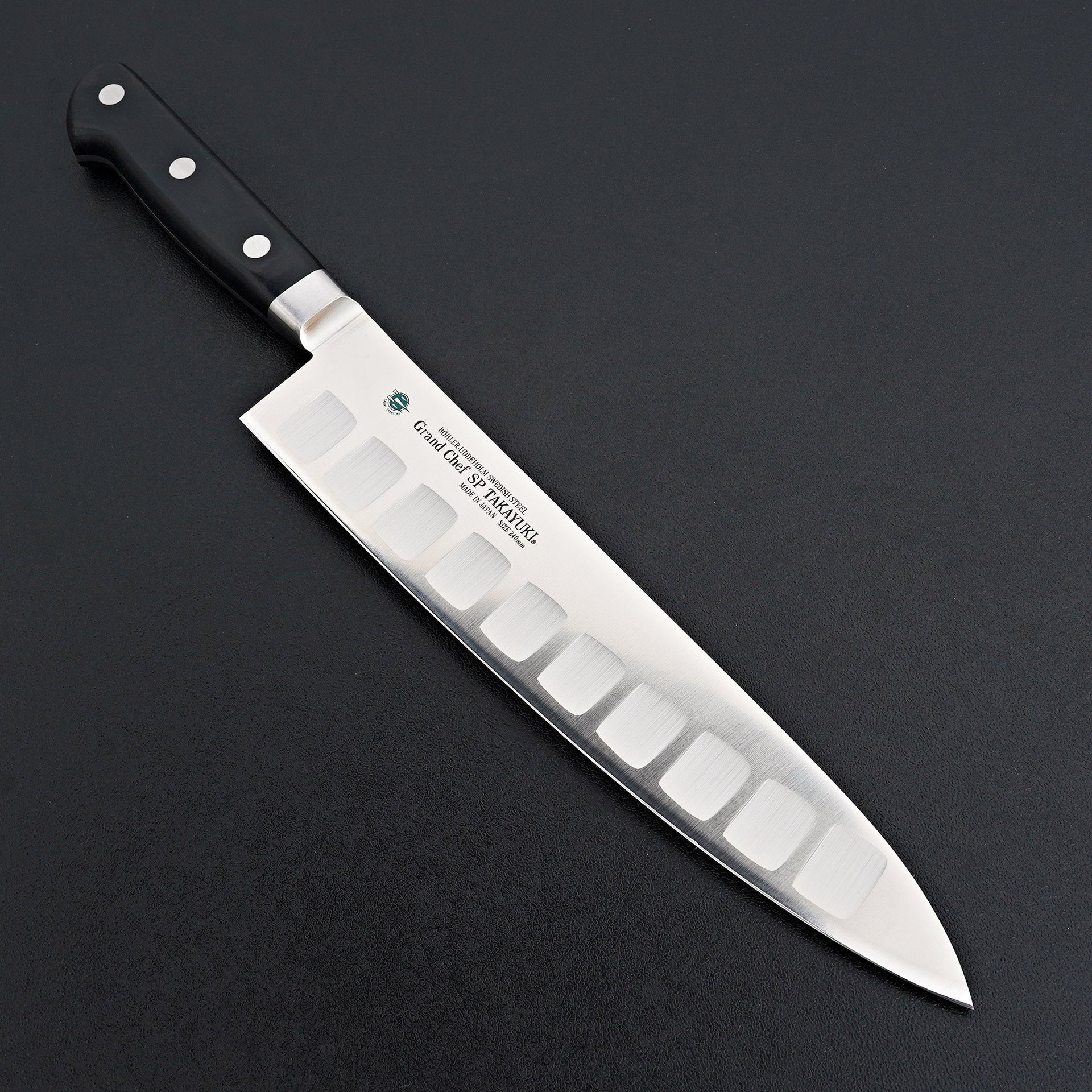
 Type-III Swedish Steel Gyuto
Professional workhorse designed for the demands of restaurant kitchens. Swedish N690 steel with a Western handle for all-day comfort.
33-Layer Damascus VG10 Hammered Gyuto
The global bestseller. 33-layer damascus cladding with a distinctive tsuchime hammered finish that reduces food sticking during cutting.
 45-Layer Damascus
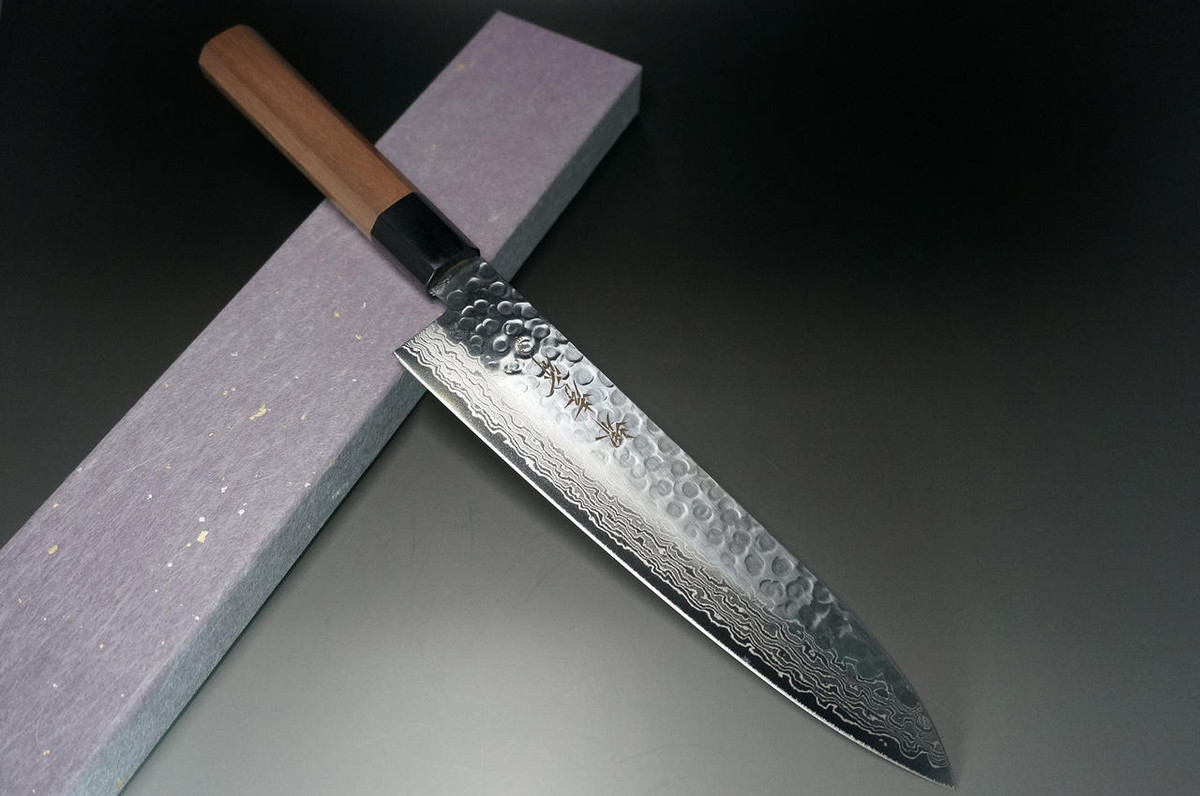
 VG10 WA Gyuto
A refined mid-range damascus with 45 layers over a VG10 core. Traditional Japanese wa handle in magnolia wood with buffalo horn ferrule.
 SPG2 Damascus
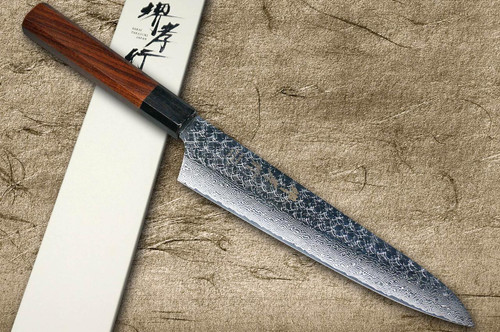
 R2 Powder Steel Hammered Gyuto
Extreme hardness (HRC 62-64) from SPG2 powder metallurgy steel. Damascus cladding with hammered finish for a blade that stays sharp for months.
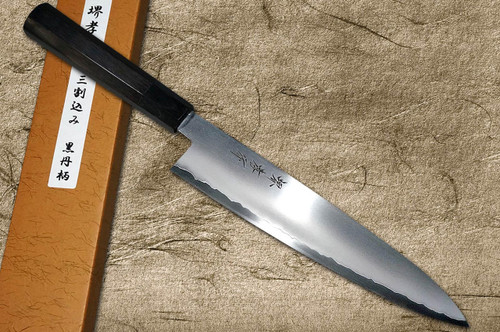 Ginsan Warikomi
 Silver-3 Ebony Gyuto
Traditional warikomi construction with Silver-3 stainless steel. Rust-resistant, easy to maintain, with a distinguished ebony wa handle.
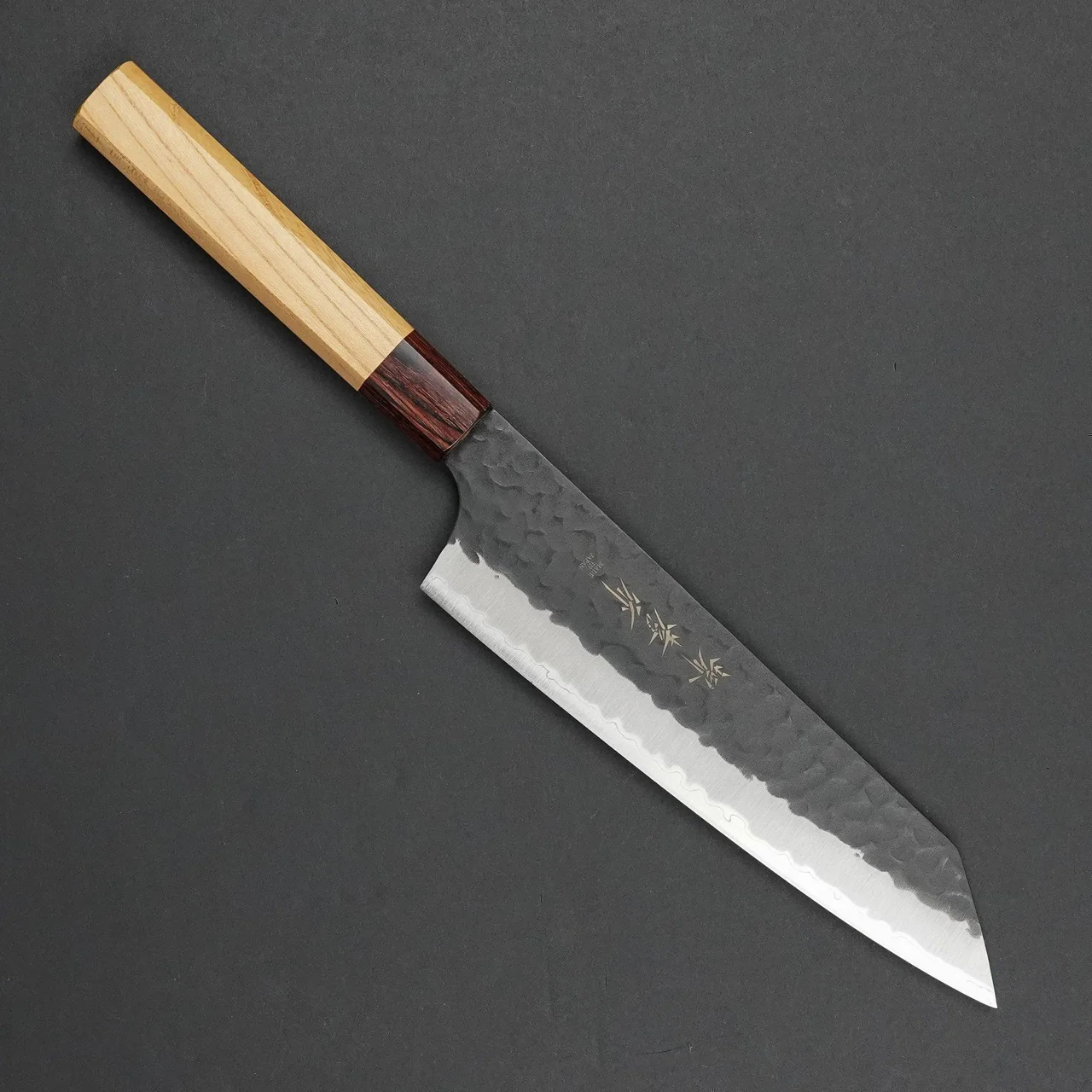 Aoniko
 Blue 2 Steel Gyuto
Traditional carbon steel at its finest. Aogami #2 steel takes a razor edge and develops a unique patina over time, telling the story of every meal.
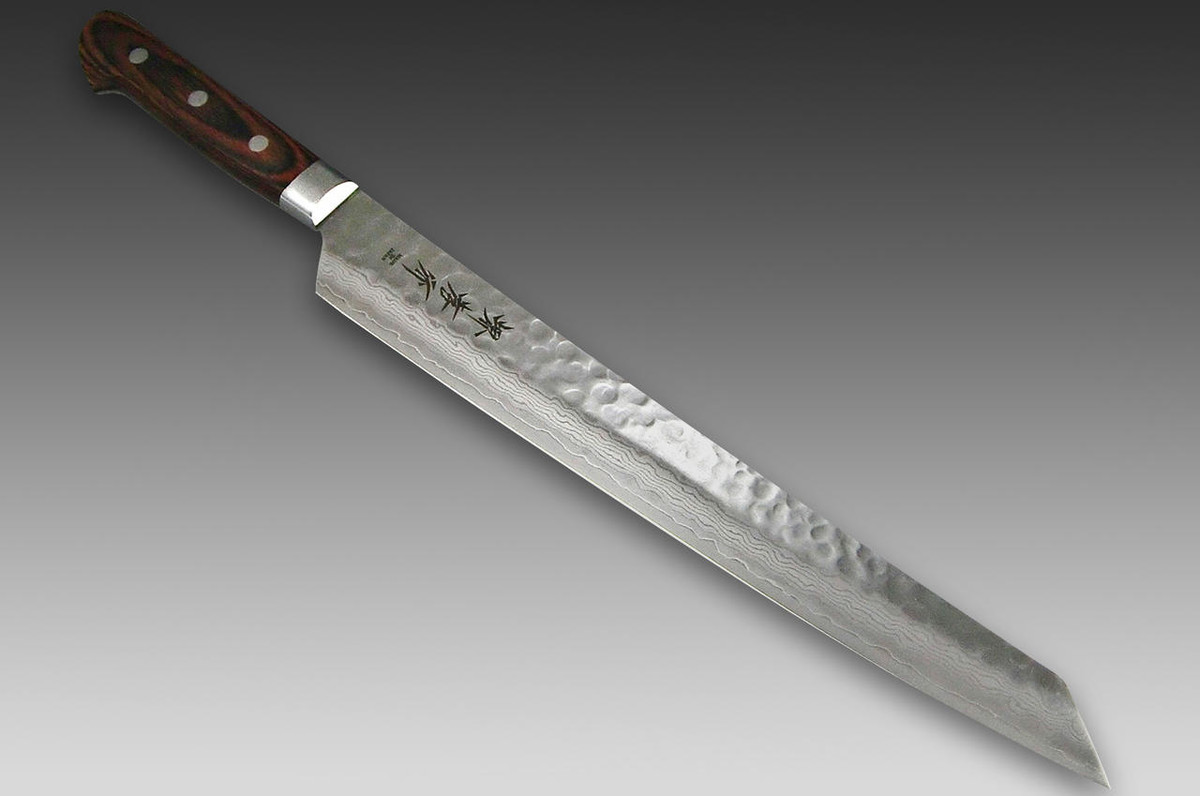 17-Layer Damascus
 VG10 Damascus Gyuto
The most accessible entry into Sakai Takayuki damascus. 17-layer cladding over VG10 core delivers genuine handcrafted quality at remarkable value.
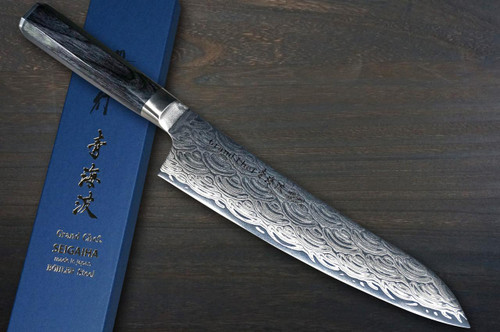 SEIGAIHA Grand Chef
 Wave-Pattern Damascus Gyuto
Named after the traditional Japanese seigaiha wave pattern. A stunning visual Damascus that combines Grand Chef performance with artistic expression.
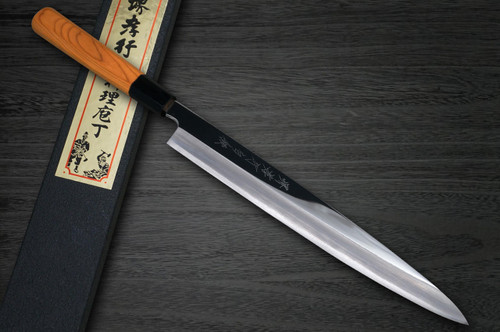 Hakugin INOX
 Mirror Finish Gyuto
Professional-grade stainless steel with a flawless mirror polish. The entry point to Sakai Takayuki's professional line, trusted in kitchens across Japan.
The Choice of Culinary Professionals
Years of Heritage
Blade-making tradition in Sakai dating back to the 14th century, when the city supplied katana to Japan's warrior class.
Countries Worldwide
Sakai Takayuki knives are trusted by professional chefs and passionate home cooks in over 100 countries across every continent.
Years of Excellence
The Aoki Hamono workshop has been forging premium kitchen knives since 1950, combining tradition with continuous innovation.
What Chefs Are Saying
“I have been cooking professionally for eighteen years, and my Sakai Takayuki gyuto is the first knife I reach for every morning. The edge geometry is simply perfect - it falls through onions with almost no effort. I have knives that cost three times as much that don't perform half as well.”
Marcus Chen
Executive Chef — San Francisco
“I bought the 33-layer VG10 Damascus as my first Japanese knife, and it completely changed how I feel about cooking. The balance is so natural that the knife feels like an extension of my hand. Two years later, it still takes a razor edge with just a few passes on a whetstone.”
Emma Lindström
Home Cook & Food Writer — Stockholm
“As a sushi chef, the quality of my yanagiba defines the quality of my work. Sakai Takayuki's single-bevel knives hold an edge that glides through fish without tearing a single fiber. The craftsmen in Sakai understand what professionals need because they have been serving them for generations.”
Takeshi Yamamoto
Sushi Master — Tokyo
Frequently Asked Questions
Are Sakai Takayuki knives good?
Yes. Sakai Takayuki knives are consistently rated among the best Japanese kitchen knives by professional chefs and home cooks worldwide. They combine 600 years of Sakai blade-making heritage with modern steel technology, and every knife is hand-forged and hand-sharpened - not stamped out of a factory. The 33-layer VG10 Damascus series is their most popular line and offers exceptional performance at a fair price for hand-forged cutlery.
Are Sakai Takayuki knives hand forged?
Yes. Every Sakai Takayuki knife is hand-forged by master blacksmiths in the Aoki Hamono workshop in Sakai, Osaka. The blades are heated in a forge, hammered into shape, and then hand-sharpened by the Yamatsuka family of sharpeners using the honbazuke technique. No machine stamping, no laser cutting - each blade is shaped individually by a skilled craftsman.
Where are Sakai Takayuki knives made?
Every Sakai Takayuki knife is handcrafted in Sakai, Osaka Prefecture, Japan - a city with over 600 years of blade-making heritage. The knives are produced in the Aoki Hamono workshop, where master blacksmiths and sharpeners work under one roof to forge, grind, and sharpen each blade individually.
What steel does Sakai Takayuki use?
Sakai Takayuki uses a wide range of steels depending on the series, including VG10 stainless steel (33-layer and 45-layer Damascus), Aogami #2 carbon steel (Homura series), Ginsan Silver-3 stainless, SPG2/R2 powder metallurgy steel, N690 Swedish steel (Grand Chef series), and ZA-18 powder stainless (GINGA series). Each steel is chosen for its specific performance characteristics.
Do Sakai Takayuki knives require special care?
Japanese kitchen knives benefit from simple, consistent care. Always hand wash and dry immediately after use - never put them in the dishwasher. Store them on a magnetic strip, in a knife block, or with a blade guard (saya). Carbon steel blades (Aogami, Homura series) should be wiped dry during use to prevent rust and will develop a natural protective patina over time. Stainless steel blades are more forgiving but still deserve hand washing.
How often should I sharpen my Sakai Takayuki knife?
For home cooks using the knife daily, honing on a ceramic rod every 2–3 uses and sharpening on whetstones every 3–6 months keeps the edge performing at its best. Professional chefs who use their knives for hours each day typically sharpen every 1–2 weeks. Sakai Takayuki blades are hand-sharpened before leaving the workshop using the honbazuke technique, so they arrive extremely sharp.
What is Damascus steel and why does it matter?
Damascus steel in kitchen knives refers to a cladding technique where multiple layers of different steel types are forge-welded together, then folded repeatedly. This creates blades with distinctive wave-like patterns, enhanced durability, and a balance between hardness (for edge retention) and flexibility (to prevent chipping). The pattern is not merely decorative - each layer contributes to the blade's structural integrity.
What is the difference between single-bevel and double-bevel knives?
Single-bevel knives (kataba) are sharpened on only one side and are traditional Japanese designs like yanagiba (sashimi slicers) and deba (fish butchery). They produce extremely clean cuts but require skill to use. Double-bevel knives are sharpened symmetrically on both sides, like Western-style chef knives, and include gyuto, santoku, and nakiri. Sakai Takayuki produces both types across their extensive range.
Which Sakai Takayuki knife is best for a beginner?
The 33-Layer VG10 Damascus Hammered series is the ideal entry point. It combines VG10 stainless steel (easy maintenance, excellent edge retention) with a hammered finish that reduces food sticking, at a price point that makes professional Japanese craftsmanship accessible. The Western-handle version is especially approachable for those new to Japanese knives.
What Sakai Takayuki knife should a chef buy?
Professional chefs tend to reach for the Grand Chef SP series (Swedish N690 steel, Western handle, built for all-day service) or the Homura Guren line (Aogami #2 carbon steel, hand-forged by Itsuo Doi, for those who prefer a traditional wa handle). For a versatile gyuto that handles everything from brunoise to protein fabrication, the 210mm or 240mm Grand Chef SP gyuto is the workhorse choice.
What makes Sakai Takayuki different from other Japanese knife brands?
Unlike many brands that outsource manufacturing, Sakai Takayuki is produced entirely in-house at the Aoki Hamono workshop. They employ multiple master blacksmiths - including Itsuo Doi and Kenji Togashi - and the Yamatsuka family of sharpeners, all working together under one roof. With over 50 distinct knife series spanning from accessible VG10 lines to art-level Honyaki blades, they offer the widest range of any Sakai-based knife maker.
Are Sakai Takayuki knives suitable for professional kitchen use?
Absolutely. The Grand Chef series is specifically engineered for the demands of professional kitchens, with Swedish N690 steel and ergonomic Western handles designed for all-day use. Many of Japan's finest restaurants rely on Sakai Takayuki blades daily. The brand's professional pedigree is rooted in Sakai's history of supplying blades to Japan's culinary elite.
Do Sakai Takayuki knives come with a warranty?
Sakai Takayuki knives are covered by the manufacturer's warranty against defects in materials and workmanship. Because each knife is hand-forged and hand-sharpened, slight variations in finish and dimensions are normal and a hallmark of authentic craftsmanship rather than a defect. For warranty claims, contact the authorized retailer from whom you purchased the knife.
What is Honyaki and why is the FUGAKU so expensive?
Honyaki refers to knives forged from a single piece of high-carbon steel that is differentially hardened using a clay-coating technique during water quenching. This creates a blade with an extremely hard cutting edge and a softer, more flexible spine - a process with a high failure rate that only master smiths can execute reliably. The FUGAKU line represents the absolute pinnacle of this art, with a mirror finish that takes weeks of hand-polishing. Each FUGAKU is a functional work of art.
Join Our Newsletter
Be the first to know about new collections, limited-edition releases, and stories from the Sakai workshop.
No spam. Unsubscribe anytime.